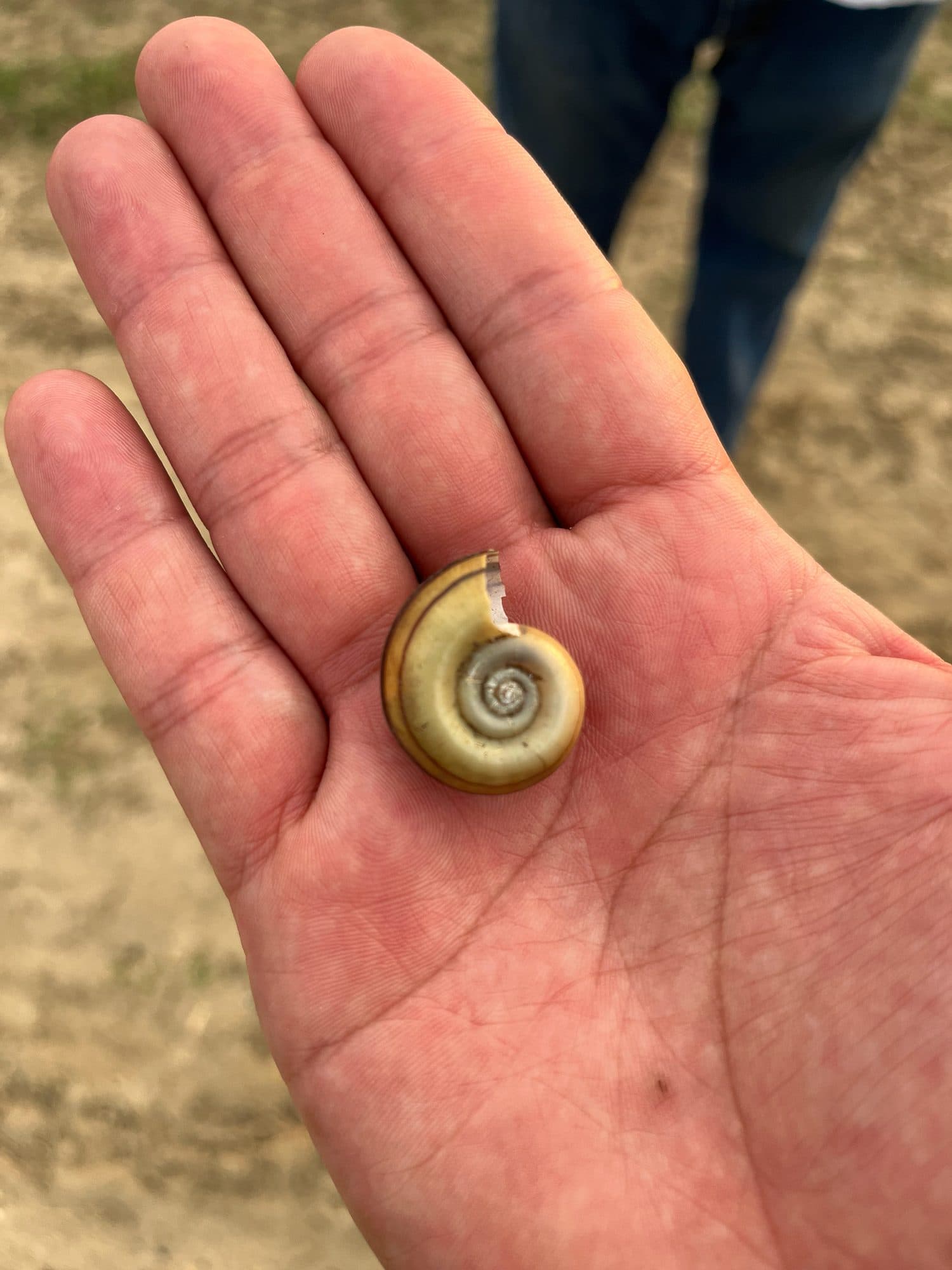
Photo: Dairo Escobar, CC BY 4.0, via iNaturalist
Views: 1 — animal ; 2 — coquille ; 3 — coquille.
Giant ramshorn snail
Marisa cornuarietis
5 cm
Adult size
50 L
Minimum volume
1
Minimum group
2 years
Lifespan
Size: shell height.
Water parameters
Understand these valuesHardness (GH): not given by the sources
Carbonate hardness (KH): not given by the sources
- Genus
- Marisa
- Diet
- omnivore
- Social life
- solitary
- Activity
- diurnal
- Adult habitat
- fresh water
- Breeding
- in fresh water
In the wild
Overview
The giant ramshorn snail has a flat-coiled shell, yellow to brown and marked with dark bands. Although it looks like a large planorbid, its appetite for plants greatly changes how the tank can be set up.
- Scientific name
- Marisa cornuarietis (Linnaeus, 1758)
- Classification
- Architaenioglossa › Ampullariidae
- IUCN Red List
- Least concern (LC)
Natural habitat
Northern South America and southern Central America; introduced in the United States, Cuba, Egypt, Spain and the West Indies
Observations (GBIF) and localities Native countries Rivers and lakes
It lives in shallow, calm water in rivers, ponds, lakes and marshes, between 13 and 30 °C. In heavily vegetated areas it can exceed 150 individuals per square metre.
Behaviour
Active by day, it has no particular social ties. Omnivorous with a clear liking for plants, it eats aquatic plants and may attack other snails, their eggs and their young when short of food.
In the aquarium
Care and setup
Allow for the risk of plants being eaten and uprooted. It does not suit a project meant to keep delicate vegetation.
Feeding
It is omnivorous with a herbivorous leaning. Vary plant foods and suitable prepared foods rather than letting it depend on the plants of the decor.
Breeding
The sexes are separate. The eggs are laid below the surface on submerged supports, and the whole cycle takes place in fresh water.
Sources:Fishipedia GBIF · Base map: Natural Earth